

The teaching library of Jon Sole, MD
The Sole Source
Your Turn
A live, hands-on session with AI, run from your phone.
Claude works through one clinical case on the big screen, and every phone in the room takes part. You vote on what it does next, build prompts and run them from your own phone, and ask questions the room votes up. Each principle of how these models work comes up when the case needs it, so you leave able to use them at work the next day.
See the lecture01 Join
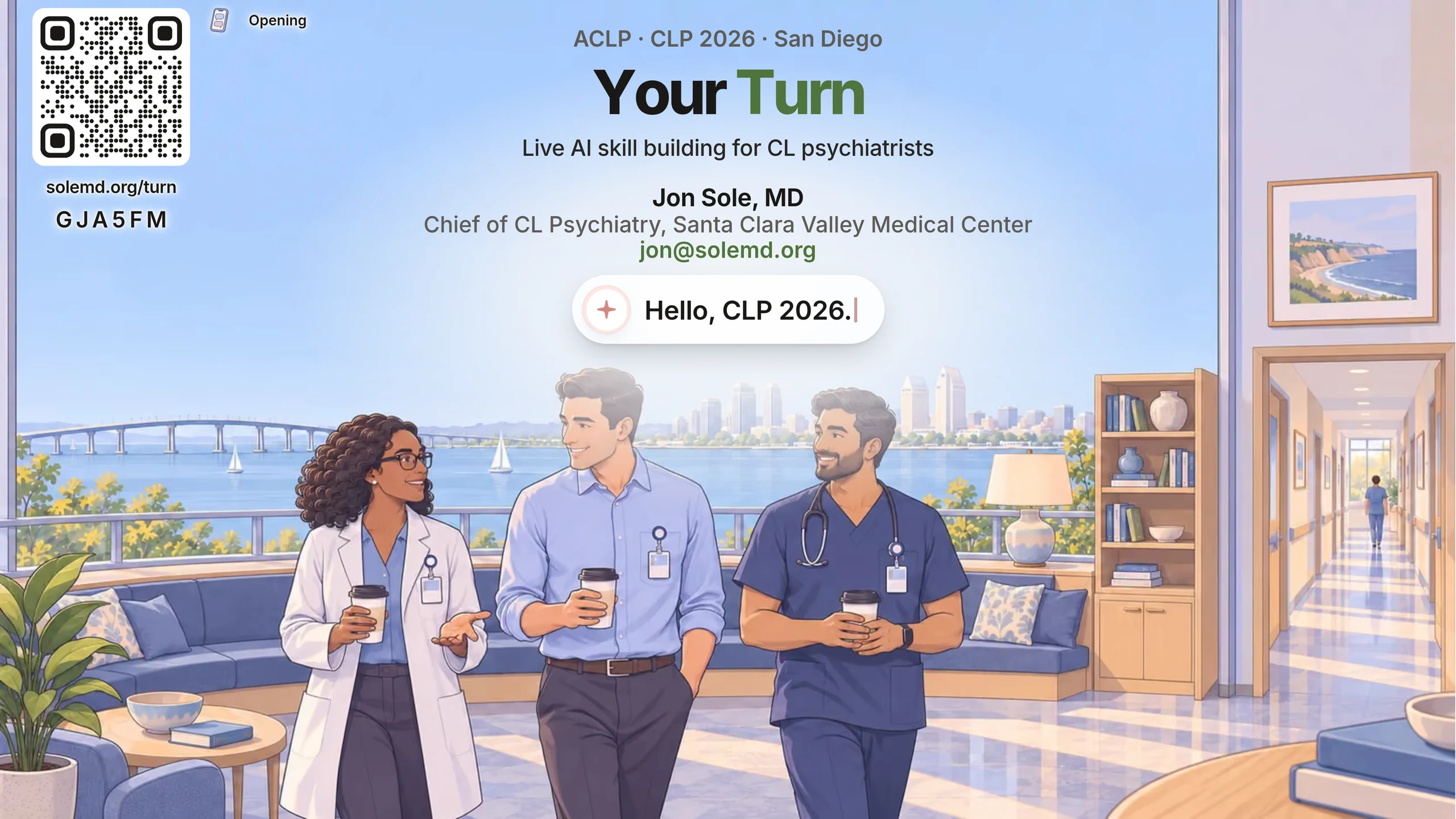
Join from your phone.
Type the code on the screen into your phone’s browser and you are in, with no app and no sign-up. Your phone becomes Claude’s chat for the session, and nothing you type is kept after it ends.

02 Vote
Steer the AI with your votes.
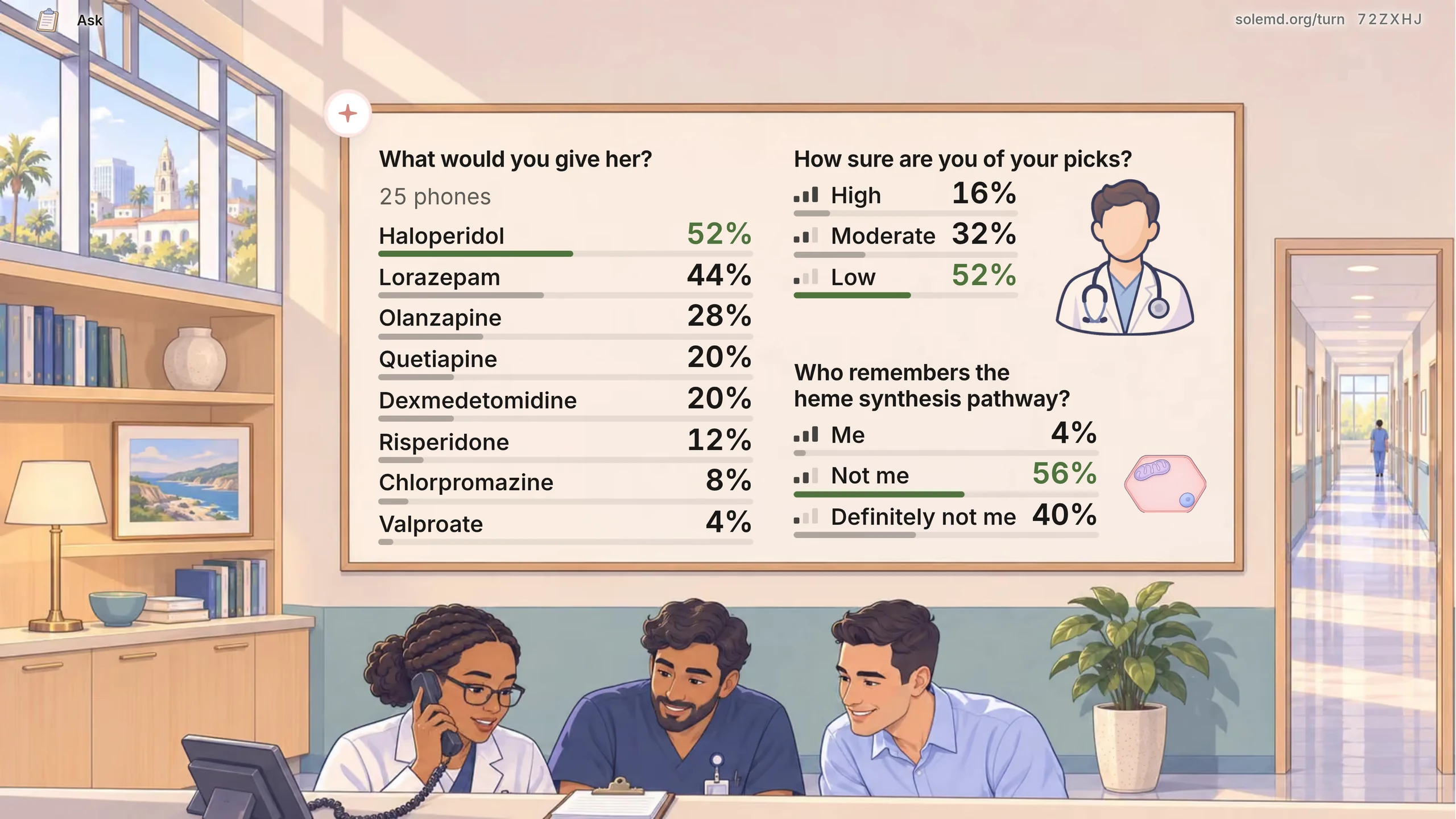
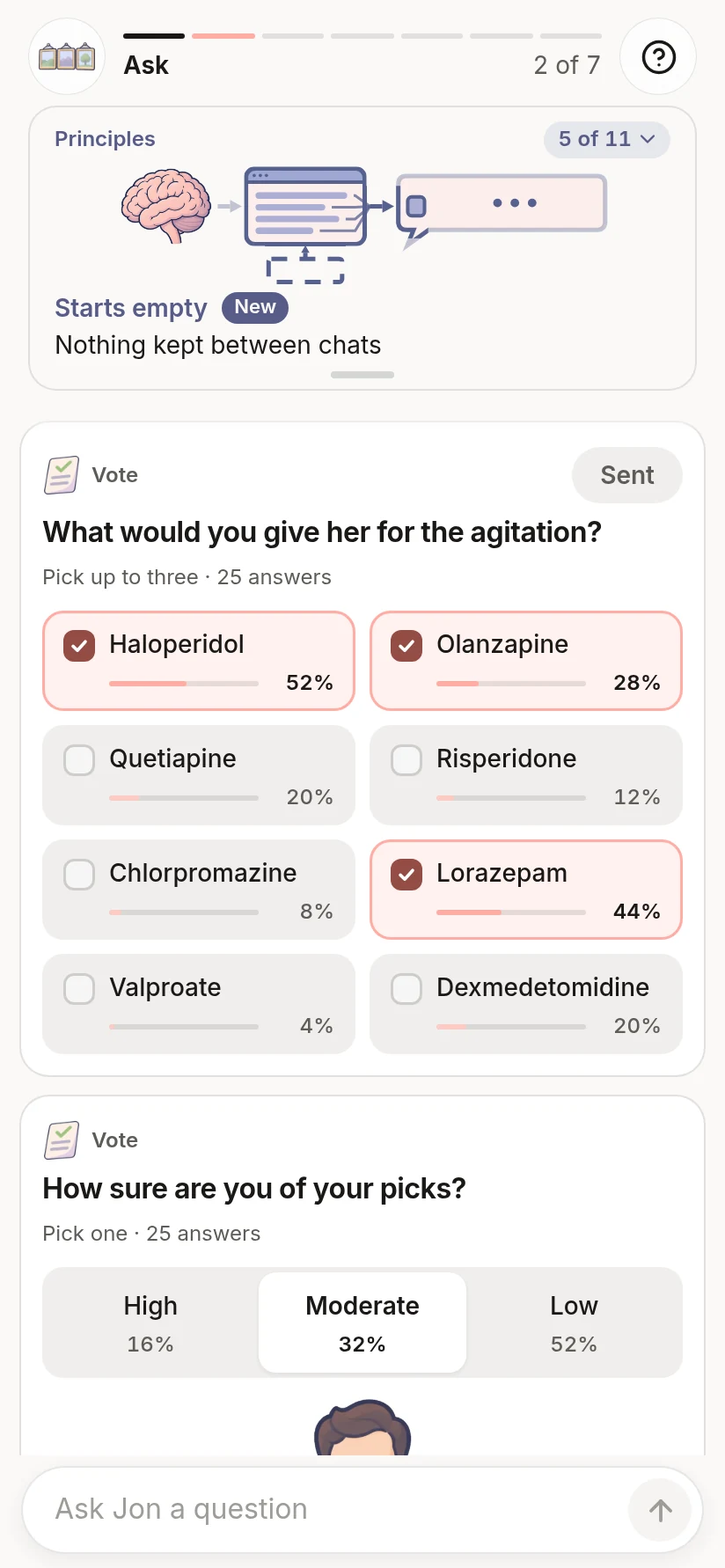
When the case reaches a decision, Claude asks the room. Votes reach the screen as they arrive, you can change your pick until Jon presses Start, and the room’s answer is what Claude works from.
03 Watch it work
See how the model does the work.
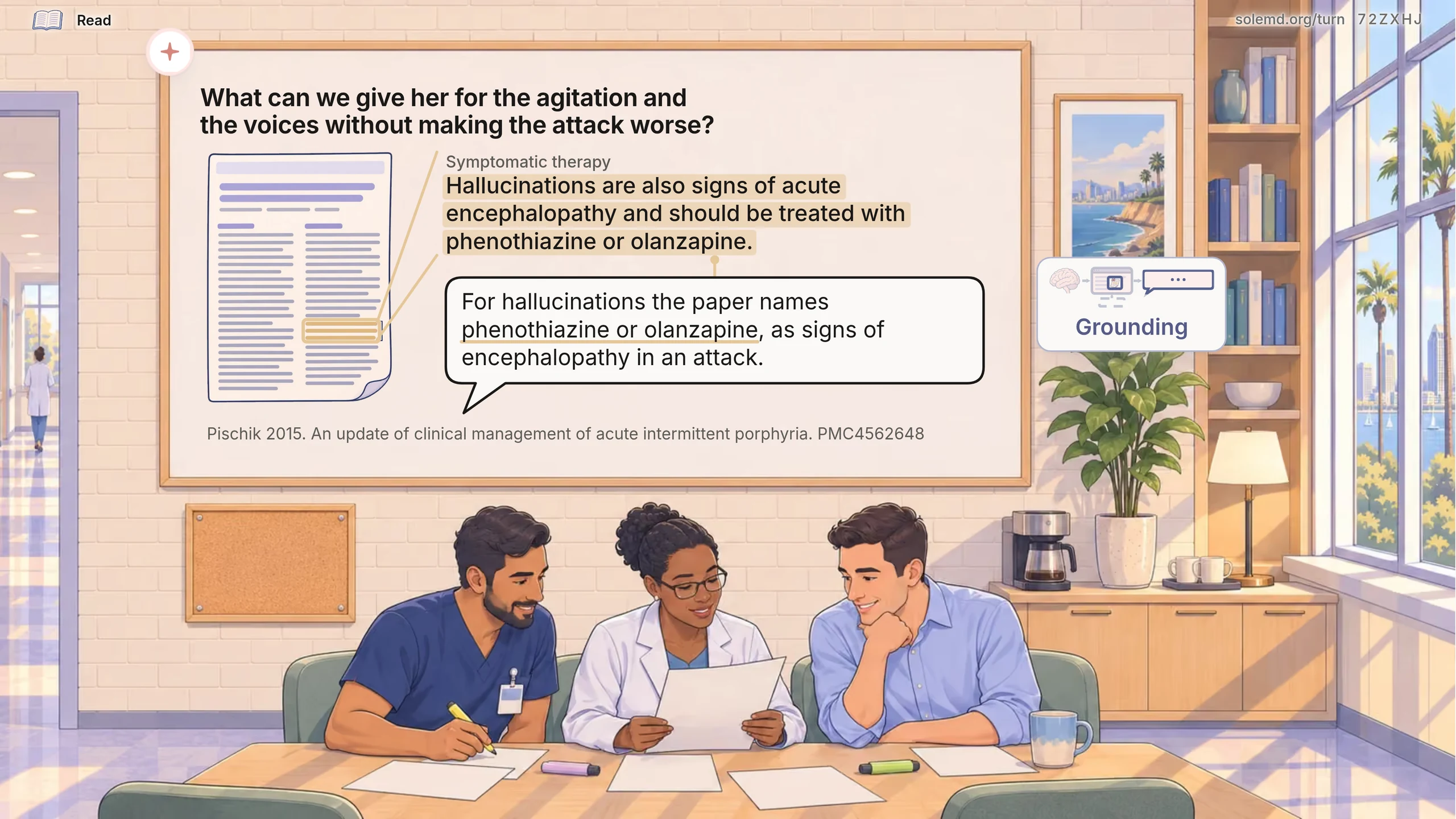
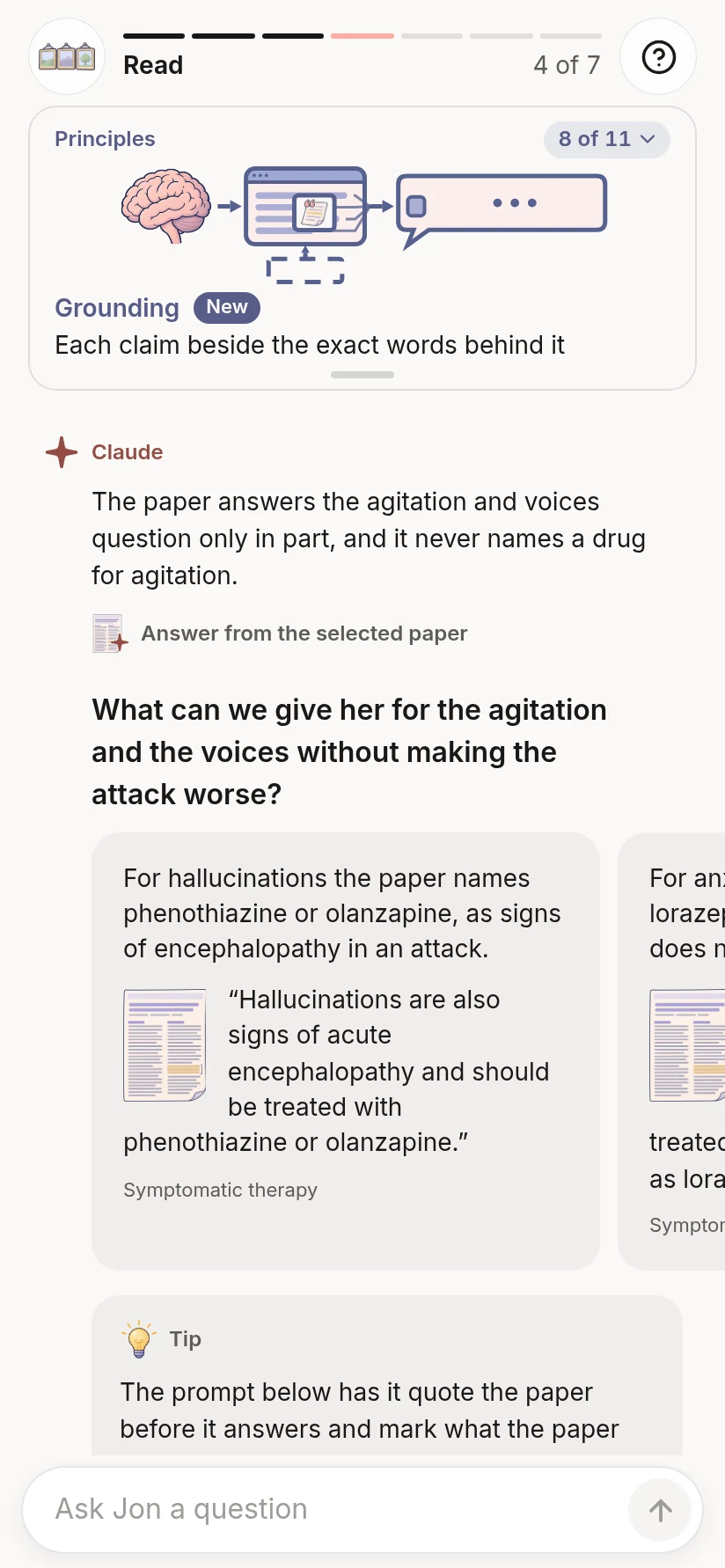
The screen shows what Claude reads, which tools it calls, what comes back and how full its context is. Each principle behind that work is named when the case shows it and lights on your phone, so you learn the foundations with a real answer in front of you.
04 Ask
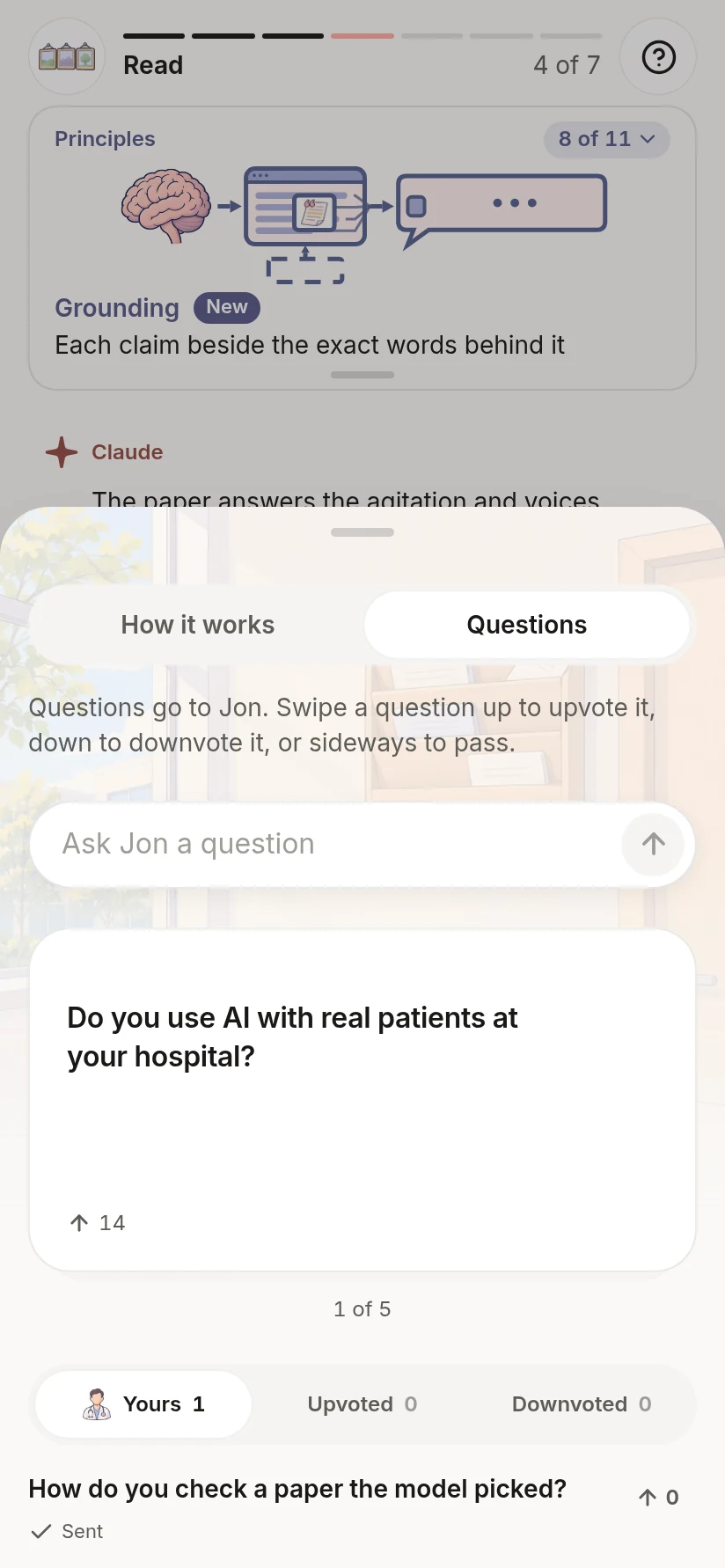
Ask questions, and vote on the room’s.
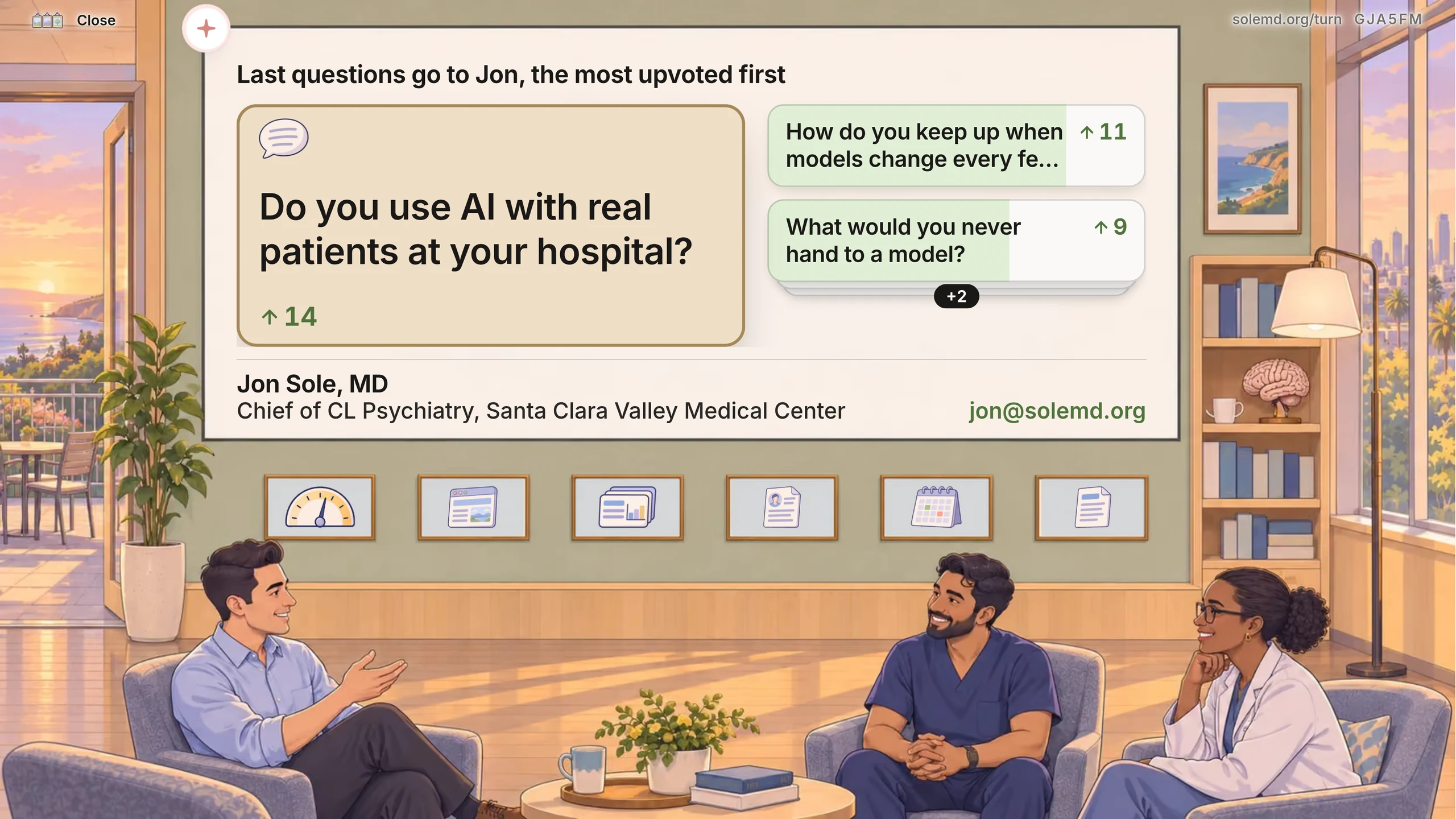
Send Jon a question at any point, and swipe through the room’s to vote up the ones you want answered. A co-host passes some to Claude during the session, and at the close Jon answers the rest, most upvoted first.


Let's build something together.
For teaching invitations, collaboration, or questions about a lecture, get in touch directly.